
Cosmetic Mole Removal in NYC: Safe, Precise, and Natural-Looking Results
Moles are extremely common and, in most cases, harmless. However, for many patients, moles can be a source of self-consciousness, irritation, or discomfort, especially when they are raised, dark, located on the face, or frequently rubbed by clothing or shaving. Cosmetic mole removal is a simple, effective way to improve both appearance and confidence.
At Premier Dermatology & Aesthetics, cosmetic mole removal is performed by Dr. Adam Nabatian, a double board-certified dermatologist and Mohs Micrographic surgeon with advanced training in skin cancer detection, surgical techniques, and cosmetic dermatology. Every mole is carefully evaluated to ensure it is safe to remove and that results look as natural as possible.
What Is Cosmetic Mole Removal?
Cosmetic mole removal is a dermatologic procedure performed to remove benign (non-cancerous) moles for aesthetic or comfort-related reasons. Patients often seek cosmetic mole removal to:
Improve facial symmetry or appearance
Remove raised moles that interfere with makeup or hair
Eliminate moles that rub against clothing or jewelry
Reduce irritation from shaving or friction
Before any cosmetic removal, each mole is thoroughly examined to confirm that it does not show signs of skin cancer.
Why Professional Evaluation Matters
Not all moles are purely cosmetic. Some require medical evaluation or biopsy to rule out skin cancer, including melanoma. Attempting at-home mole removal or seeing non-medical providers can lead to serious risks, such as:
Missed melanoma diagnosis
Infection or poor wound healing
Unnecessary scarring
Incomplete removal or mole recurrence
At Premier Dermatology & Aesthetics, patient safety comes first. If a mole appears suspicious, Dr. Nabatian may recommend biopsy or medical removal instead of cosmetic treatment.
Types of Moles Commonly Removed for Cosmetic Reasons
Patients in NYC commonly request removal of:
Raised or flesh-colored moles
Dark or pigmented facial moles
Moles on the neck, chest, or back
Moles in high-friction areas (collar line, bra line, shaving areas)
Each treatment plan is individualized based on mole type, size, location, and skin type.
Cosmetic Mole Removal Techniques
Dr. Nabatian uses many advanced dermatologic techniques designed to minimize scarring and support optimal healing. The best treatment depends on the mole’s size, depth, location, and whether there is any medical concern. At our practice, moles are carefully evaluated by a board-certified dermatologist to determine the safest and most effective removal method.
There are three primary techniques used for mole removal: shave removal, excisional removal, and laser removal. Below is an overview of how each procedure works and when it may be recommended.
Shave removal
After numbing the area with local anesthesia, Dr. Nabatian uses a precise, razor-like instrument to gently shave the mole flush with the surrounding skin.
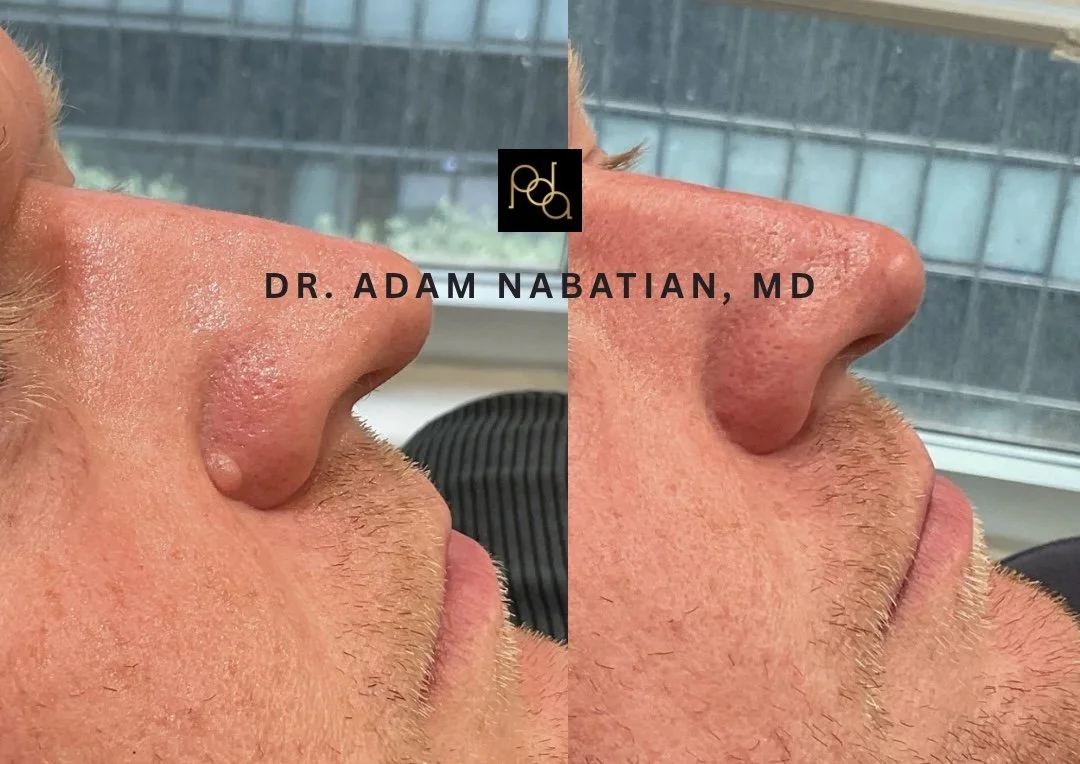
In some cases, electrosurgical contouring may be used to smooth the edges and reduce the visibility of the treated area, allowing for optimal cosmetic results.
Key Points:
No stitches required
Quick, in-office procedure
Minimal downtime
Ideal for cosmetic mole removal when medically appropriate
Healing typically involves mild scabbing, and the area gradually blends in with the surrounding skin over time.
Excisional removal
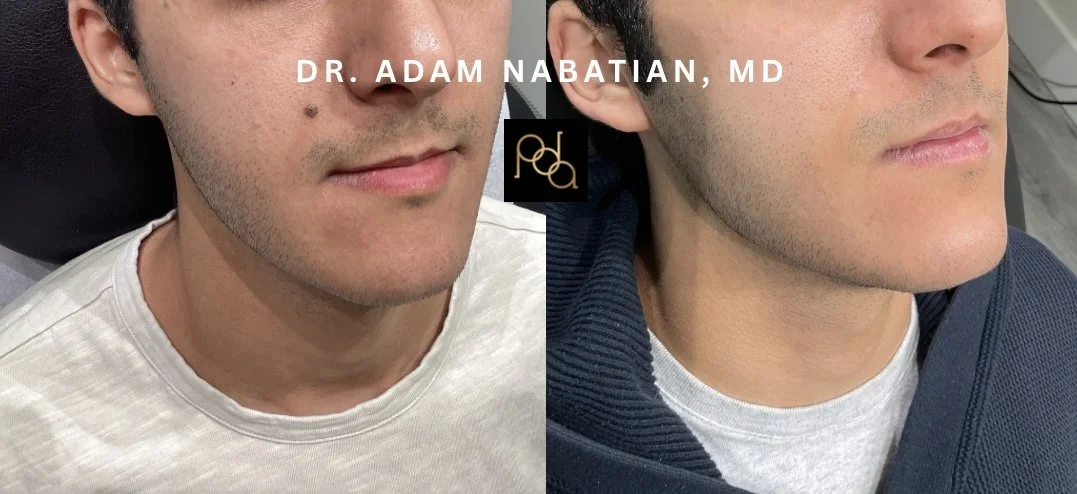
Excisional removal is recommended for deeper benign moles and larger lesions. This technique involves removing the entire mole, including its root beneath the skin, to ensure complete removal.
The area is closed with sutures, and the tissue is often sent to a pathology lab for further evaluation.
Key Points:
Removes the mole in its entirety
Requires stitches for proper healing
Allows for medical analysis when needed
Leaves a thin, linear scar that fades with time
Excisional removal is considered the gold standard when medical accuracy and long-term safety are the priority.
Laser removal
Laser mole removal uses targeted light energy to break down pigment in select benign moles or pigmented lesions. This approach does not involve cutting the skin and is performed without incisions or stitches.
Laser treatment is only appropriate for certain superficial, non-suspicious moles and is determined on a case-by-case basis by a dermatologist.
Key points:
No cutting or sutures
Minimal downtime
May require multiple sessions
Cosmetic-focused treatment only
Suspicious moles should never be treated with laser and must be properly evaluated before removal.
Dr. Adam Nabatian will recommend the safest and most appropriate technique for your specific mole.
What to Expect During Cosmetic Mole Removal
Consultation
Your visit begins with an evaluation to confirm the mole is benign and suitable for cosmetic removal.
Procedure
Local anesthesia is used for comfort
The procedure typically takes 15–30 minutes
Aftercare
Simple wound care instructions are provided
Mild redness or scabbing may occur and is normal
Healing typically takes 1–2 weeks
With proper care, scars are typically minimal and continue to fade over time.
Will the Mole Come Back?
When fully removed, most moles do not return. In rare cases, partial regrowth may occur, particularly with shave removal, which is why selecting the proper technique is important.
Why Choose Premier Dermatology & Aesthetics for Mole Removal in NYC?
Double board-certified dermatologist and Mohs Micrographic Surgeon
Expertise in cosmetic, surgical, and medical dermatology
Precision techniques focused on minimizing scarring
Convenient Midtown Manhattan location near Grand Central
Your skin is treated with both medical expertise and cosmetic precision.
When Should a Mole Be Checked Instead of Removed?
You should seek a medical evaluation if a mole shows any of the following warning signs:
Asymmetry
Irregular or uneven borders
Color variation
Growth or change
Bleeding or itching
Dr. Nabatian uses dermoscopy and diagnostic tools to determine whether a mole is cosmetic or medically necessary to remove.
Schedule a Cosmetic Mole Removal Consultation in NYC
If a mole is affecting your confidence or daily comfort, cosmetic removal may be a simple and effective solution.
Call (212) 433-3788 or visit us online to schedule your appointment today.
Cosmetic Mole Removal FAQ
Q1: Is cosmetic mole removal safe?
Yes. When performed by a board-certified dermatologist, cosmetic mole removal is safe and effective. Each mole is evaluated first to ensure it is benign before removal.
Q2: Will my mole be tested for skin cancer?
If a mole appears suspicious, Dr. Nabatian may recommend a biopsy and send the tissue for pathology to rule out skin cancer.
Q3: Does cosmetic mole removal hurt?
The procedure is performed under local anesthesia, so patients typically feel little to no discomfort during treatment.
Q4: Will cosmetic mole removal leave a scar?
Any skin procedure can leave a small scar, but advanced techniques are used to minimize scarring. Most scars fade significantly over time with proper aftercare.
Q5: How long does healing take?
Healing typically takes 1–2 weeks, depending on the size and location of the mole and the removal method.
Q6: Can a mole grow back after removal?
Most moles do not return when fully removed. Rarely, partial regrowth can occur.
Q7: Can I remove a mole at home?
At-home mole removal is not recommended. DIY methods increase the risk of infection, scarring, and missed skin cancer diagnosis.
Q8: How do I know if my mole is cosmetic or medical?
A professional skin evaluation using tools like dermoscopy helps determine whether a mole is benign and suitable for cosmetic removal.
