
Basal Cell Carcinoma (BCC)
A Clear, Dermatologist‑Led Guide to the Most Common Type of Skin Cancer
What Is Basal Cell Carcinoma?
Basal cells are one of the primary cell types that make up the epidermis, the outermost layer of the skin. These small, round cells sit at the base of the epidermis and continually divide to create new skin cells as older ones shed. When basal cells accumulate DNA damage—most often from chronic ultraviolet (UV) exposure—they can begin to grow in an abnormal, uncontrolled way. This process leads to basal cell carcinoma, the most common form of skin cancer.
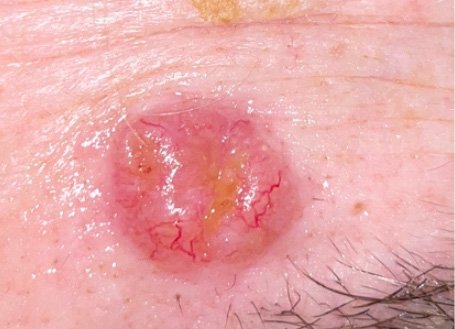
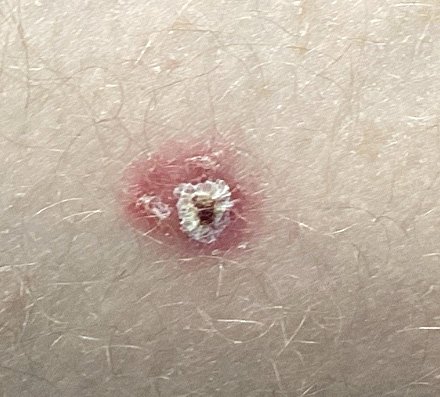
What Does Basal Cell Carcinoma Look Like?
BCCs can take on many different appearances, which is why they are sometimes overlooked in their early stages. Depending on skin tone and location, a BCC may appear as:
A shiny or pearly bump
A pink or red patch that slowly enlarges
A growth with rolled or raised edges
A scar‑like, flat, or firm area
A sore that crusts, oozes, or bleeds
A pigmented lesion (tan, brown, or black), especially in deeper skin tones
Because BCCs often arise on sun‑exposed areas—such as the face, scalp, ears, neck, and upper body—they may be mistaken for benign spots or old scars. In patients with darker skin, BCCs are more likely to be pigmented and can resemble a mole, making professional evaluation especially important.
When to Seek a Dermatology Evaluation
Any new, evolving, or non‑healing spot should be examined—especially if it bleeds, becomes tender, or changes in texture. Early diagnosis allows for simpler, more effective treatment and reduces the risk of the cancer spreading.
Expert Evaluation and Treatment of Basal Cell Carcinoma in NYC
As a double board‑certified dermatologist and fellowship‑trained Mohs micrographic surgeon, Dr. Adam Nabatian provides comprehensive care for patients with suspected or confirmed basal cell carcinoma. He performs detailed skin examinations, evaluates any concerning lesions, and recommends the most effective treatment based on the tumor’s location, depth, and behavior.
When appropriate, Dr. Nabatian performs Mohs micrographic surgery in the office—an advanced, tissue‑sparing technique that offers the highest cure rates for BCCs on delicate or cosmetically sensitive areas such as the head, neck, hands, and groin. This precise approach removes cancerous tissue while preserving as much healthy skin as possible.
Ongoing skin monitoring is essential for anyone with a history of skin cancer or significant sun exposure. Routine skin checks, sun protection, and prompt evaluation of new or changing lesions help ensure early detection and optimal outcomes. Adults and children with concerning spots or a prior diagnosis of BCC can receive a thorough evaluation and a personalized care plan.
Schedule Your Basal Cell Carcinoma Evaluation in NYC
If you’ve noticed a new spot, a non‑healing area, or a growth that’s changing over time, a professional skin exam is the safest next step. At Premier Dermatology & Aesthetics, Dr. Adam Nabatian—a double board‑certified dermatologist and fellowship‑trained Mohs surgeon—provides expert diagnosis and advanced treatment options for basal cell carcinoma, including Mohs micrographic surgery for delicate or cosmetically sensitive areas.
Early evaluation leads to the most effective and least invasive treatment.